© NHW/ProjektStadt
The development area in Homberg (Efze)
In 2025, the town of Homberg (Efze) successfully applied to be included in the "Social Cohesion" funding programme.
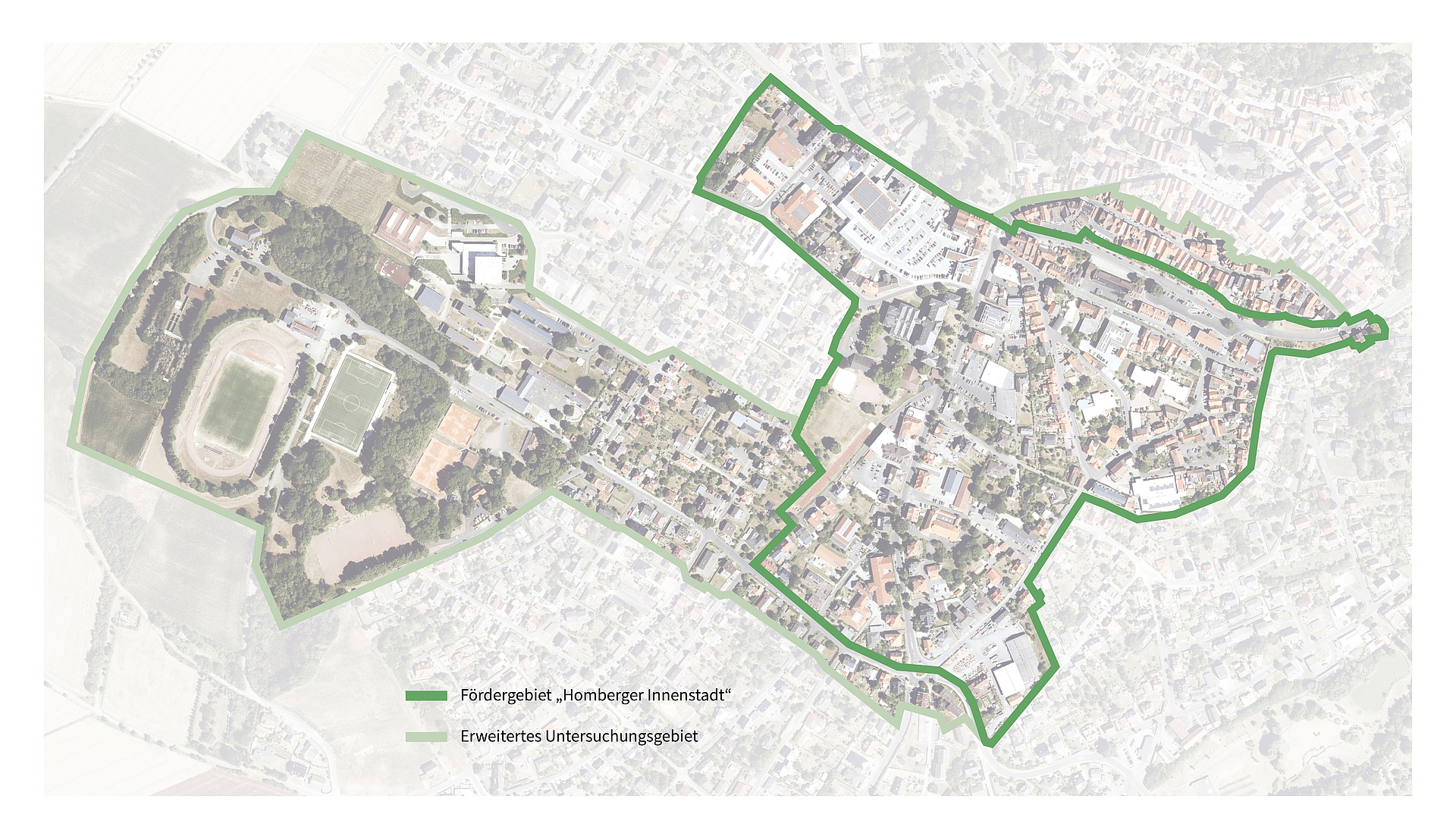
The area for which funding will be available over the next 10 years essentially comprises the area south of the town centre, i.e. the central service area of the town of Homberg (Efze). Inclusion in the programme provides the opportunity to continue the impetus, approaches and ideas that were collected in a participatory manner in the National Urban Development Policy model projects "WANDELpfad" and "Kleinstadt im Wandel - Von der Kleinstadt zur WANDELstadt" and to implement them with the help of the funding.
Territorial demarcation
The subsidies can only be used within a geographically defined area, the so-called development area. In Homberg (Efze), this consists of the following sub-areas:
- the central supply area along Ziegenhainer Straße, which was laid out as a grand boulevard in the Wilhelminian era and served as an important trade route at the time it was built,
- the medieval Freiheit, which is located to the south of Wallstraße and was an independent town alongside the centre of Homberg (Efze) in the Middle Ages, and
- the southern part of the historic old town, which includes Untergasse and parts of Holzhäuser Straße.
In addition, the area around the sports park as well as the Erich-Kästner-Schule and the Stellbergschule, which are located on the western edge of the town centre, are included in the study. If the ISEK development process confirms that there is a need for development in this area, an extension of the provisional development area will be examined and sought.
© NHW/ProjektStadt
© NHW/ProjektStadt

© NHW/ProjektStadt
© NHW/ProjektStadt

© NHW/ProjektStadt
© NHW/ProjektStadt
Challenges in the development area
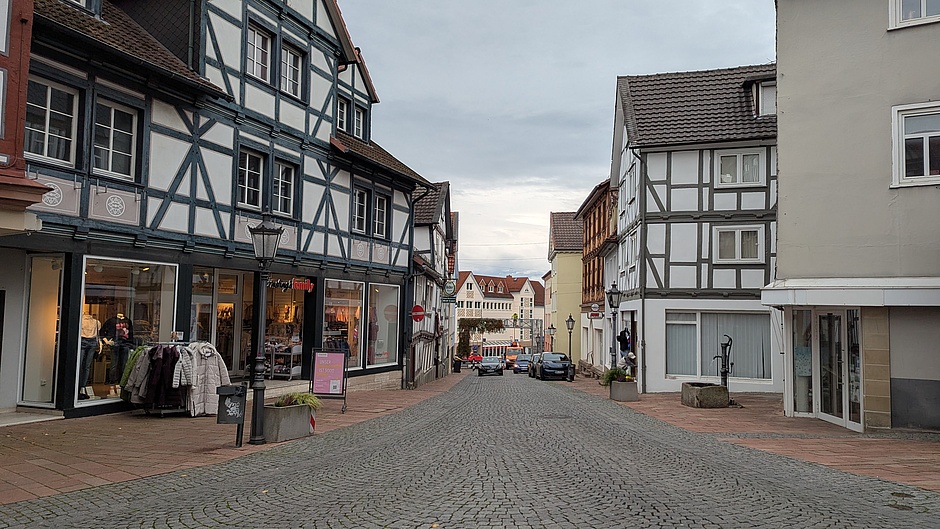
The area south of the town centre plays an important role for the entire town of Homberg (Efze). It connects the old town with the neighbouring districts and is a central residential, working and supply location. It offers a wide range of everyday amenities, from shopping facilities and services to schools, doctors' surgeries and social and cultural facilities.
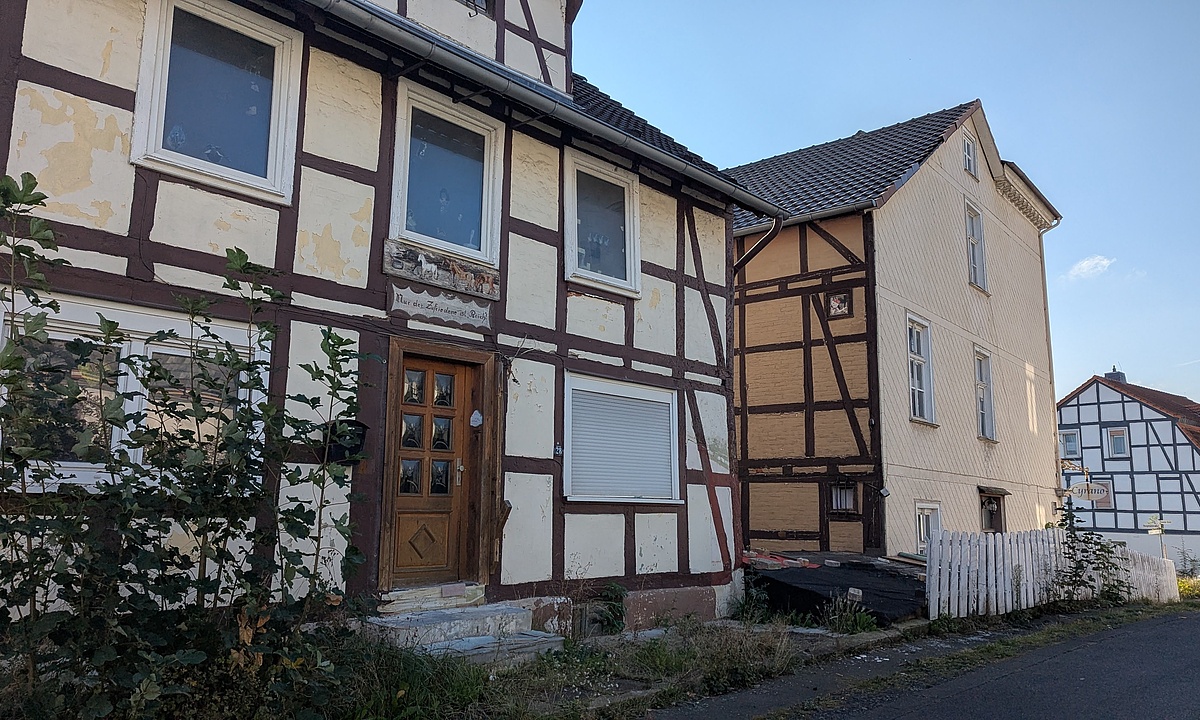
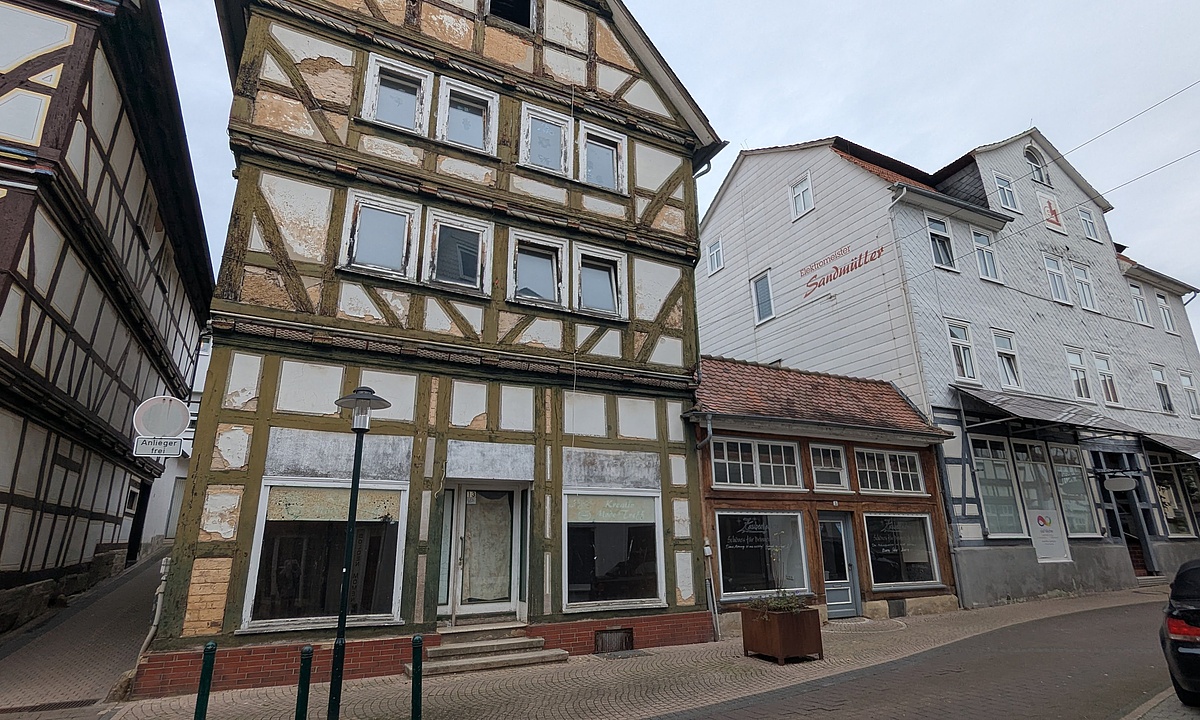
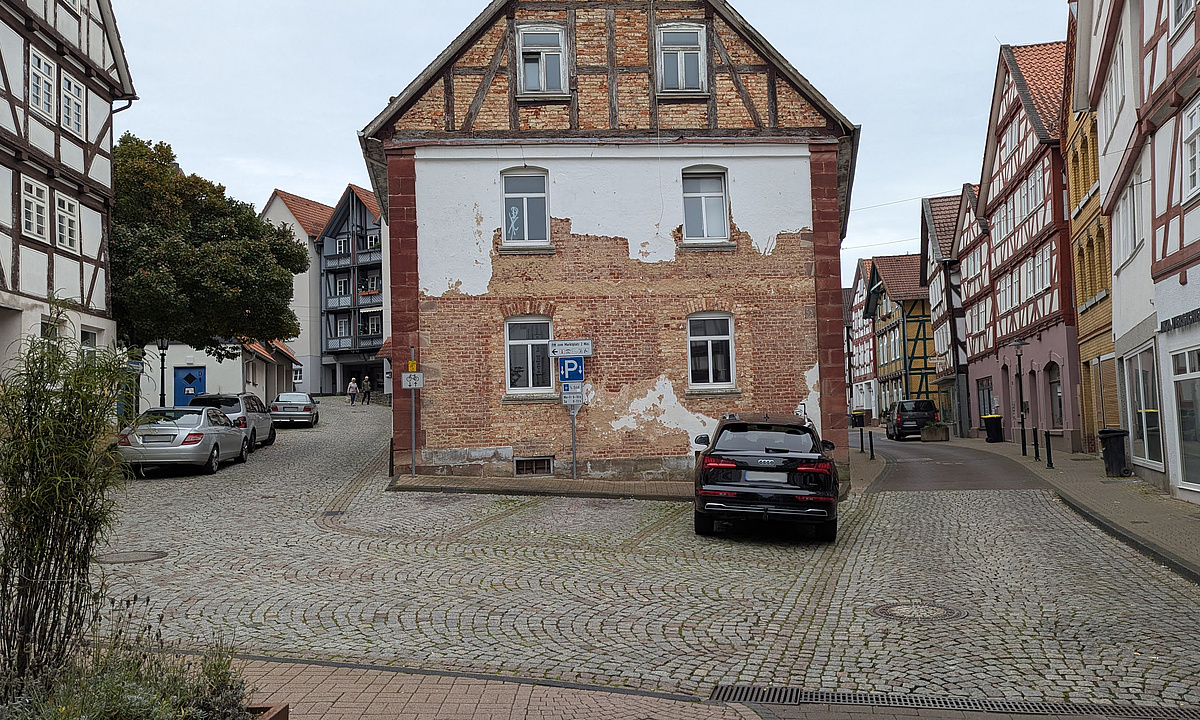
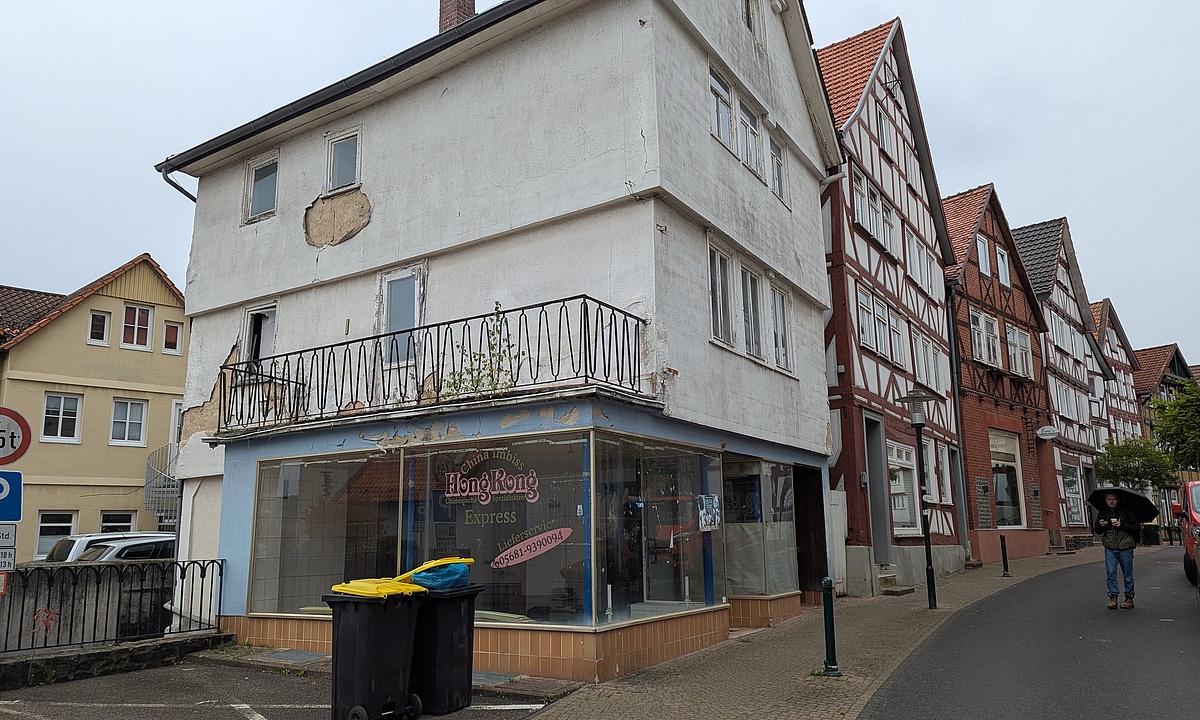
In recent years, however, increasingly negative developments have been observed: More and more buildings are standing empty, shops are closing and there is a considerable need for refurbishment in many places. This is creating gaps in the cityscape and some areas are looking increasingly lifeless.
Despite these challenges, the area offers great opportunities. Together with committed citizens, these are to be identified and realised in suitable projects. The ISEK serves as a roadmap- it describes the existing problems, defines objectives and specifies the measures for their implementation.